
Business automation
Connect routine work across the systems your team already uses.
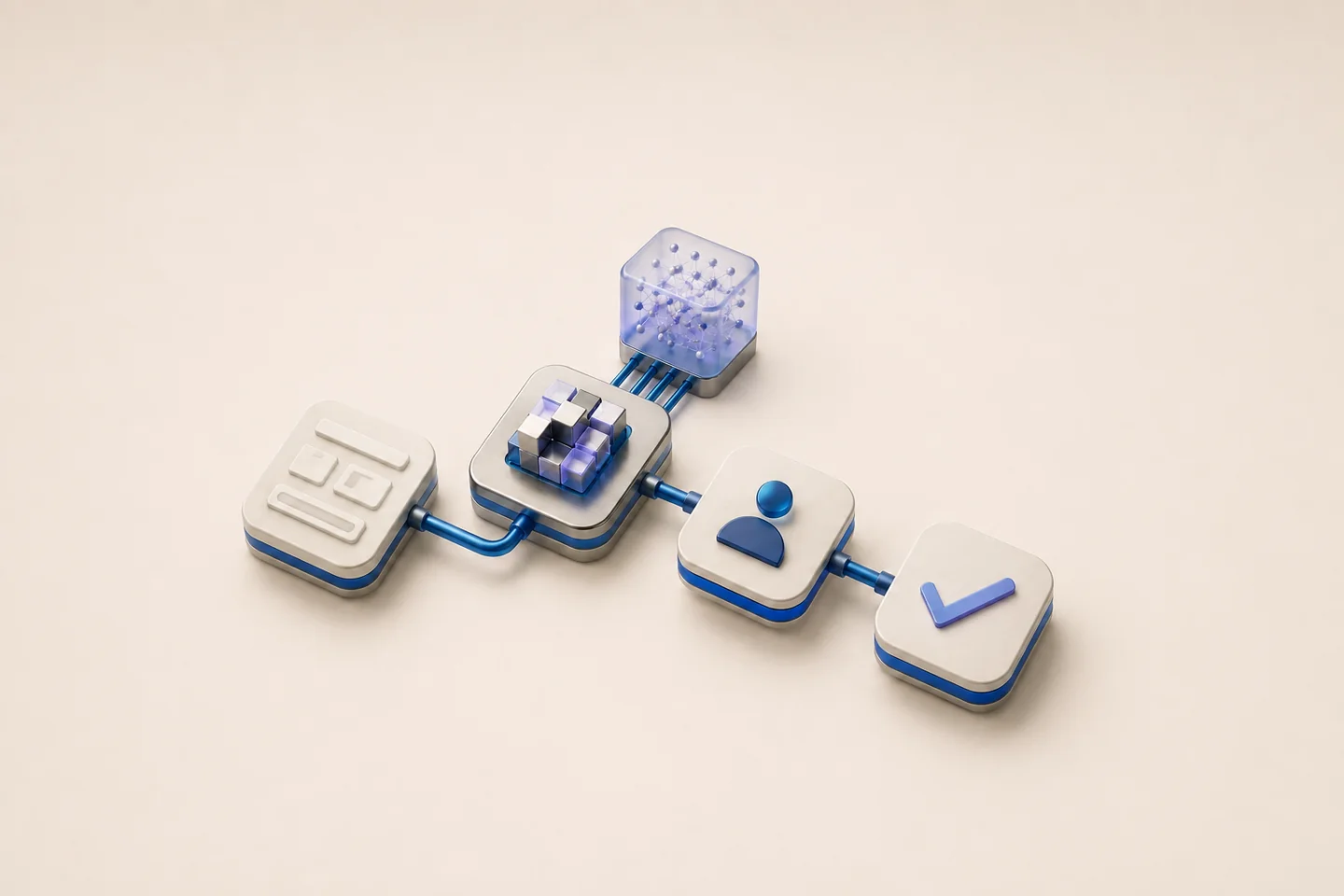
When it fits
Workflow automation, system integrations and operational handoffs that reduce the need to move information manually.
People repeat data entry, chase routine updates or move the same information between spreadsheets, email and business applications.
What we can do for you.
Choose the capabilities your project needs, with deliverables agreed around your requirements.
Workflow mapping
Map the trigger, required information, decisions and exceptions before choosing what should be automated.
System integrations
Connect available APIs and business tools with clear data ownership, access boundaries and update rules.
Tasks, notifications & approvals
Route routine work to the right person or system, retaining approval steps for actions that need a human decision.
Recovery & operational visibility
Account for failed requests, duplicates and exceptions, with a way for the responsible team to review and recover the work.
A plan that fits your business.
Your goals, existing assets and the people involved shape the work. Agree these details before the engagement begins.
How we work- Identify the process owner and exceptions that require judgement instead of an automatic action.
- Confirm integration permissions, source data quality and any vendor limits that affect the workflow.
- Define recovery, monitoring and change ownership before replacing a manual process.
Questions before we start.
Does automation need AI?
No. Rules, scheduled tasks and direct integrations often cover a well-defined process. An AI component should only be considered where it adds useful capability and its limitations can be managed.
Can we keep our tools?
That is a useful starting point. Available APIs, account access and vendor constraints determine which tools can connect and whether a workflow needs an alternative approach.
What if a workflow fails?
The design should identify failed or repeated actions, record enough context to investigate and provide a safe retry or manual recovery path. Those controls belong in the agreed scope.
Let’s discuss your project.
Share what you want to achieve, what is already in place and the support you need. Scope, responsibilities and costs can then be defined in a proposal.